
Snapshot of B-STRONG
Project title: Bangladesh Sustainable Recovery, Emergency Preparedness and Response (B-STRONG), Project
Project duration: 5 years (5th August 2025 - 30th December 2030)
Project started: August, 2025
Total project cost: US$ 47 million
Donor: World Bank and Government of Bangladesh
Implementing Ministries: Financial Institutions Division (FID), Ministry of Finance
Executing Agencies: Social Development Foundation (SDF)
Project area: 550 villages under 22 upazilas of 10 flash flood (2024) districts (Sylhet, Moulvibazar, Hobiganj, Brahmanbaria, Cumilla, Feni, Noakhali, Laxmipur, Chattogram and Cox's Bazar districts)
Participation, interaction, and mobilization remain among SDF's core guiding principles in implementing projects aimed at building a society free from deprivation, discrimination, and poverty. Following the devastating floods of 2024, SDF began implementing the B-STRONG Project (Bangladesh Sustainable Recovery, Emergency Preparedness, and Response Project), with support from the Government of Bangladesh and the World Bank, to support the recovery of flood-affected communities and strengthen their resilience to future climate-related disasters. The project is designed to address both immediate recovery needs and long-term community resilience by rehabilitating essential infrastructure, restoring livelihoods, and strengthening disaster preparedness and response mechanisms in the affected areas.
Evaluations of past World Bank-supported community-driven development (CDD) projects have confirmed that they made significant contributions to rural development and poverty reduction. Since B-STRONG's approach to livelihood support for the rural poor and extreme poor is largely consistent with that of RELI and NJLIP, most of its activities have been designed to provide a timely and effective response to post-disaster recovery needs, including one-time cash transfers to affected households, skills development training, and livelihood and financial support aimed at building beneficiaries' long-term resilience. The project is being jointly implemented by the Bangladesh Water Development Board (BWDB), the Local Government Engineering Department (LGED), the Department of Agricultural Extension–Bangladesh Agricultural Development Corporation (DAE-BADC), the Department of Disaster Management (DDM), and SDF, with each agency overseeing specific districts and components of the project.
| Area selection | : | Disaster-prone areas as identified |
| Coverage | : | 550 villages in 10 flash flood-2024-affected districts |
| Target Beneficiaries | : | The B-STRONG Project included over 88,000 severely and moderately affected households (HHs) |
| Budget | : | US$ 47 million (US$ 45 million is being provided by the International Development Association (IDA), and US$ 2 million as counterpart funds from the Government of Bangladesh) |
| Components | : | Livelihoods Recovery and Enhancement Support (Objective from POM) |
| Community empowerment and institutional strengthening | ||
| Enhancing sustainable livelihoods | ||
| Project Management, Coordination, Monitoring and Evaluation | ||
| Project Management, Monitoring and Evaluation of SDF |
Regions & District
| Region | District |
|---|---|
| Cumilla | Sylhet, Moulvibazar, Hobiganj, Brahmanbaria, Cumilla |
| Chattogram | Feni, Noakhali, Laxmipur, Chattogram and Cox's Bazar |
Institution Building (IB)
- 44,910 beneficiaries have been included in the group
- Beneficiaries are included in 2955 Groups, all of which are actively accumulating savings
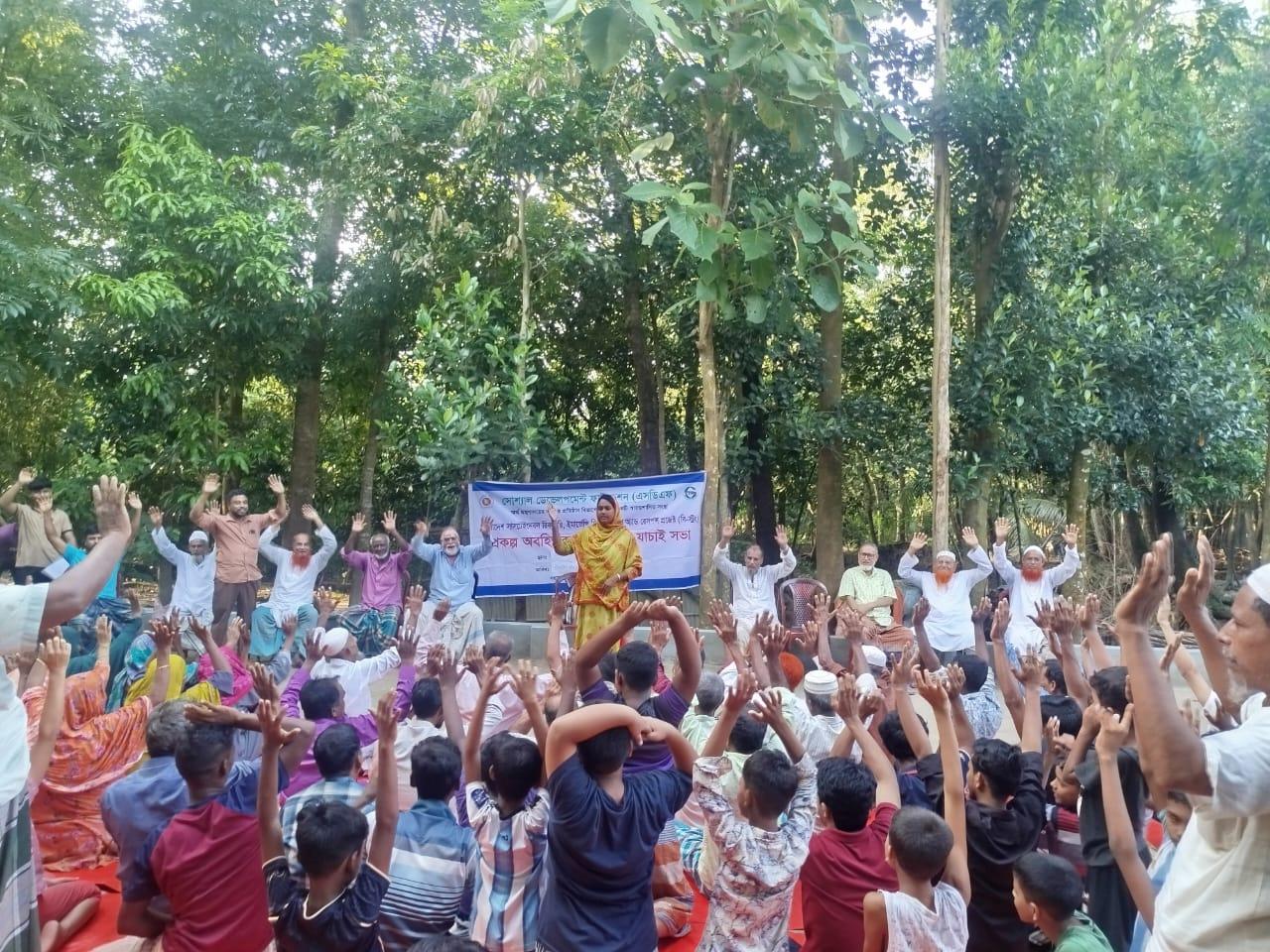
Institution building is the main vehicle for the empowerment of underprivileged people. Under the B-STRONG project, SDF is mobilizing the severely and moderately flood-affected (2024) households to build accountable, inclusive, and transparent village institutions. These institutions are designed to be multipurpose, adapting to the emerging challenges of a changing society in the areas of economic development and women's empowerment. The community brings together all severely and moderately affected households in the villages under Resilience Groups (RGs) and Gram Samitis, establishing village-level institutions and providing financial and technical support to group members to help them start income-generating activities (IGAs). Through this process, SDF strives to empower women while making communities and especially their village institutions more sustainable and resilient to future climate shocks.
Livelihood Development
- 66,000 beneficiaries will receive Revolving loans and training for starting IGAs
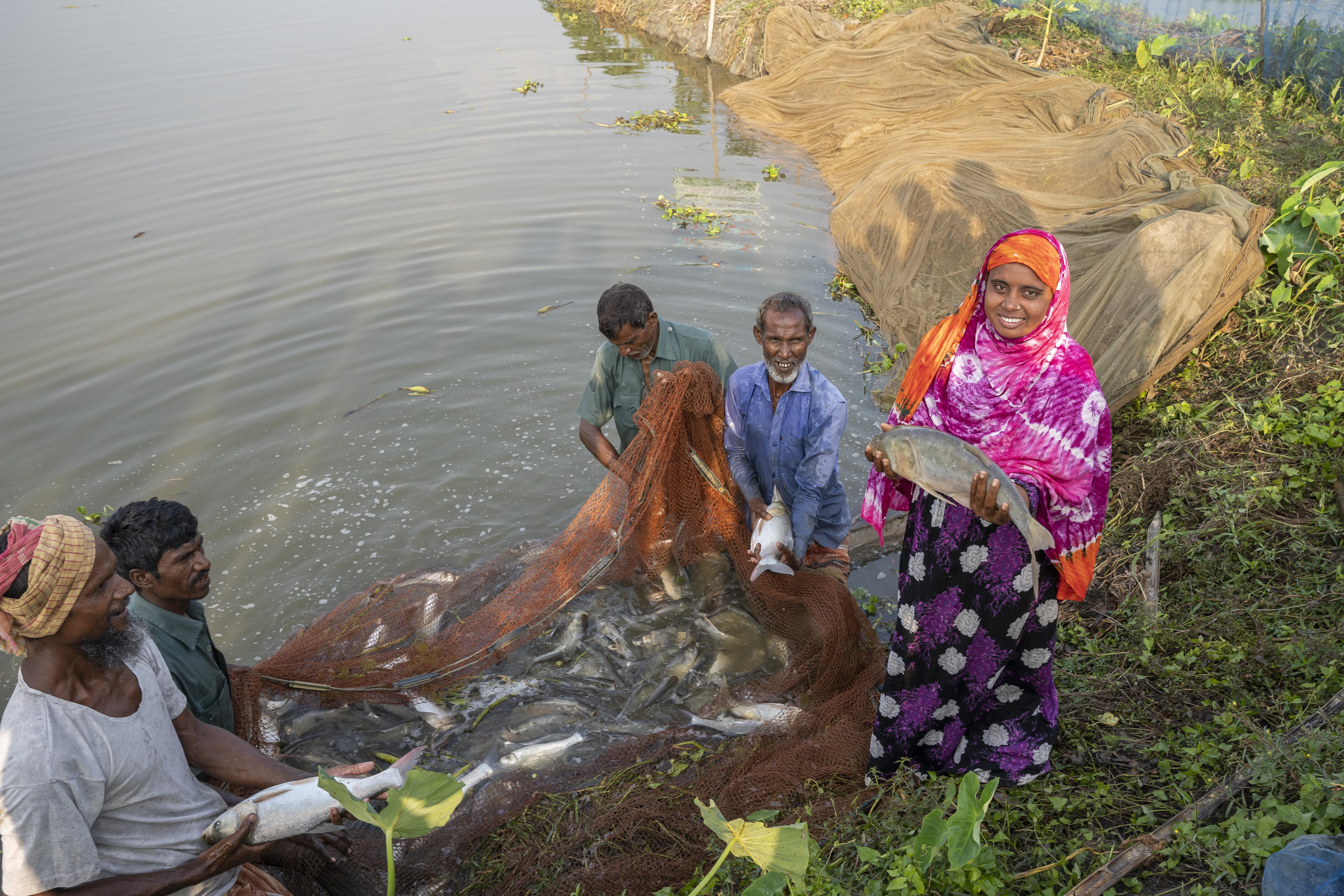
SDF works to achieve economic and social changes in severely and moderately affected households, assist them in accessing mainstream development programs, and create aspirations among severely disadvantaged groups. Through the Livelihood Development program, SDF bridges the gap between their aspiration and actions to translate the target into reality. We are focusing on the unmet needs of the severely and moderately, especially women, including areas of extreme deprivation, protecting the rights of the poor. SDF provides financial, market, technical, value chain, and business development support to the rural poor community to upgrade their lives and livelihoods.
One-time Grant (OTG) to Vulnerable
- 49,771 severely and moderately affected households received One-time Cash (OTC) out of 88,000
Vulnerable people are those who require special care, support, or protection due to age, disability, mistreatment, or neglect, as identified by each village community according to criteria defined by the project. Once identification is complete, One-Time Cash and subsequent awareness programs are implemented to help mainstream vulnerable individuals into society. Beneficiaries invest a substantial portion of the grant in micro-scale income-generating activities (IGAs). Over time, many become members of the Gram Samiti, begin saving, and take Revolving Fund (RF) loans to scale up their IGAs.
Community Finance
- Project beneficiaries will begin saving upon joining the group
- Beneficiaries will be eligible to receive revolving (Sabolombi) loans in accordance with the project guidelines.
In our holistic approach to poverty alleviation, we view Community Finance as one of the essential tools for addressing the root causes of poverty. In addition to providing access to finance, we ensure that our borrowers receive support, can exchange information, and raise their awareness on empowerment, employment, health, and social issues. This innovative, client-focused, and sustainable program is a critical component of our holistic approach to supporting livelihoods. Borrowers receive credit at a reasonable service charge to help meet recurring expenses, while contributing to the sustained growth of the Savings and Credit Organization (SVCO) fund. Through this, they engage in various income-generating activities, moving their lives toward financial and social empowerment.
Livelihood Facility works
The tangible achievements of infrastructure projects have fostered economic opportunities, created employment prospects, and strengthened community institutions. Working hand-in-hand with communities to build or improve small-scale local infrastructure such as roads, culverts, U-drains, school repairs, and water distillation/desalination systems is intrinsic to the Livelihood Facility Fund's (LFF) social and economic development activities. This program delivers services at the community level to promote income and employment generation associated with skill development.
Environment and Social Risk and Mitigation:
- All project beneficiaries across 550 villages are scheduled to receive orientation on climate risk, adaptation, and resilience building
- A grievance redress mechanism will be maintained in accordance with the project policy
Activities related to Environment and Social (E&S) risks, including occupational health and safety, community health and safety, water, air, and soil pollution, solid waste management, sexual exploitation and abuse (SEA)/sexual harassment (SH), and adolescent early marriage have been initiated to assess and implement appropriate mitigation measures. In ensuring equitable benefits for marginalized and disadvantaged groups, including indigenous peoples, the project addresses issues such as child labor risk, women's labor rights, gender disparity, and project-related grievances. All project beneficiaries are scheduled to receive orientation on climate risk, adaptation, and resilience building.
YOUTH EMPLOYMENT GENERATION SUPPORT (YEGS)
- 7,700 youth will receive skill development training on different trades-based professions
- A total of 4,620 youth are targeted for employment
In the youth employment sector, SDF's contribution to Bangladesh's progress has been significant. Our well-managed and well-resourced Youth Employment Generation Support (YEGS) program continues to advance steadily, translating commitment into action toward specific targets for reducing development disparities. The program aims to build capacity through skill development training in 32 trades for unemployed and underemployed youth — including jobless migrants, returning immigrants, and climate migrants — alongside job placement support for their socio-economic advancement. We strive to enhance employment opportunities through apprenticeships, institution-based training, and enterprise development. To this end, we have established a substantial number of partnerships with various institutions, including the Department of Youth Development (DYD), among other potential collaborators.
Study Support Grant
- 325 students will receive stipend for higher studies
Study Support Grant was introduced for highly deserving meritorious students of beneficiary families who have completed their Higher Secondary Certificate examination and struggling to start their higher studies at universities or professional institutions for inadequate financial support.
Capacity Building (CB)
- 88,000 community members will be trained on project guidelines and income-generating
- 238 staff will receive training on different skill development
SDF values efficiency and excellence in all aspects of its work, continuously evolving to perform better, meet and exceed program targets, and deepen the impact of its interventions. The Capacity Building Cell is responsible for enhancing the capacity and professionalism of SDF employees and program participants through a wide range of human development initiatives. This unit provides ongoing orientation, consistently aligning its objectives with both national goals and the Sustainable Development Goals (SDGs).
Governance and Accountability (G and A)
The Governance and Accountability (G&A) program of SDF plays a significant and effective role in keeping the project on track toward its intended goals. We firmly believe that governance must be adaptable — capable of responding to emerging challenges, changes, risks, and opportunities. The following key components support the program:
i. Governance and Accountability Plan (GAAP)
ii. Social Audit Committee (SAC)
iii. Community Assessment Process (CAP)
This program is grounded in the understanding that the core challenges of sustainable development are best addressed through robust governance and accountability mechanisms, which contribute substantially to achieving the project's intended goals and objectives.